
Rambutan
Rambutan fruit has long been recognized as a “golden” fruit of Vietnamese agriculture, not only bringing high nutritional value but also bringing good economic efficiency to growers. This fruit has a hairy outer skin, has two colors of red and yellow, has a rather sweet and slightly sour taste. Rambutan is also considered one of the typical summer fruits that tourists must try when coming to Vietnam.
This fruit today has many varieties with different characteristics and flavors.
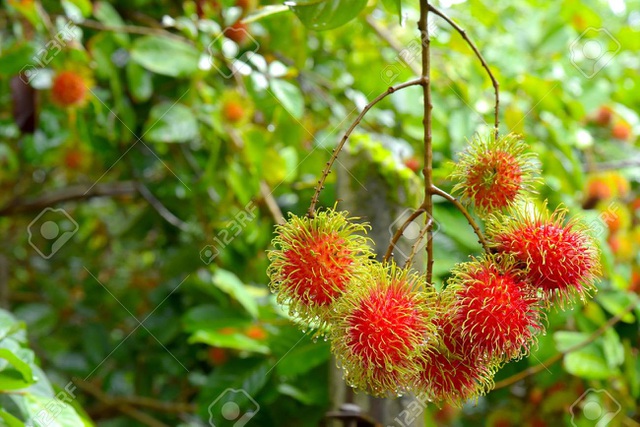 Photo: dantri.com.vn
Some types of rambutan are popular in Vietnam and their characteristics are listed as follows:
- Longan rambutan fruit: oval, with short hair, the peel when ripe turns from green to yellow, pink and finally red. Because the fruit weight is quite small (20-30g), farmers call it Longan rambutan. This fruit is also known as sugar rambutan because when eaten, rambutan is crispy and has a sweet taste like sugar. In addition, the price of rambutan longan is quite cheap and easy to buy.
- Java: This is a rambutan variety imported mainly from Indonesia and Thailand. The characteristics of this type of rambutan are that the flesh does not stick to the seeds, the fruit is large, the hair is long, and the taste is delicious. Java rambutan and longan rambutan are two popular types of rambutan supplied to most of Vietnam’s domestic market.
- Thai rambutan: also known as Rong-private rambutan and is a relatively popular rambutan in recent times. This type of rambutan has a rather large shape, weight from 50-70 g/fruit, thick pulp and very small, flat seeds. When ripe, the skin is red, very attractive to consumers. Thai rambutan, when eaten, has a slightly sweet meat, so it is very suitable for those who like to eat fruit that is not too sweet. The price of Thai rambutan is relatively high, but because of its deliciousness, many people are still willing to buy it for their families to enjoy.
How to eat
For first-time visitors to this fruit may be confused as to how to eat because rambutan has a thick and hairy outer skin. But don’t worry, once you learn how to eat rambutan, you will find it very simple and delicious.
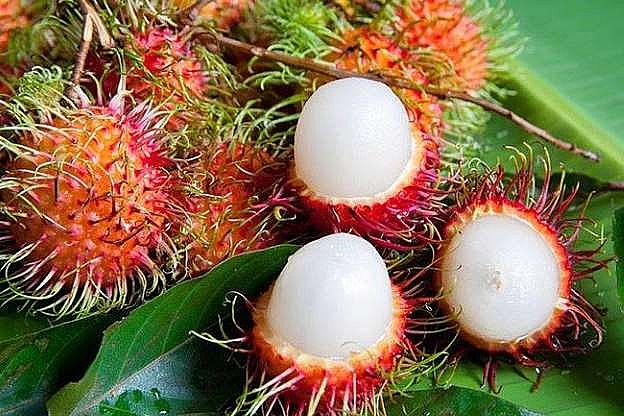 Photo: baocongthuong.com
First, place the rambutan fruit firmly on a flat surface and hold it at both ends. Slide a sharp knife along the center of the fruit, ready to cut it in half. Cut gently on the skin but do not cut on the core. Squeeze half of the fruit around the stem to lengthen the cut. You can also use your thumb to tear off the skin or even bite the rambutan in half. Just be aware that the thorns are soft and harmless, but the rind is not edible and can be slightly bitter.
Where is rambutan grown in Vietnam?
A fruit native to Southeast Asia, today rambutan is also grown in tropical climates around Vietnam. In which, java rambutan is a popular variety in Dong Nai, Ben Tre and Vinh Long areas; while Longan rambutan is usually grown in Dong Thap, Can Tho or Tra Vinh.
Early rambutan will be harvested around early May and main season rambutan will be harvested around early July every year. Therefore, coming to these rambutan gardens at this time of year, visitors can both admire the magnificent beauty of Vietnam’s countryside, immerse themselves in the scent of nature as well as enjoy the rambutan fruits. Best rambutan in season.
Benefits of rambutan
It is often warned that eating too much rambutan will increase body heat. However, if eaten in moderation, rambutan will bring you many benefits. This fruit provides a large amount of nutrients from nature including calcium, vitamin B3, vitamin A and B9. It is these minerals and vitamins that support strong bones, promote weight loss, and provide compounds with anti-parasitic properties. In addition, the juice of rambutan leaves also has a special effect, helping to nourish and replenish water for the scalp. Best of all, the seeds of this fruit contain natural anti-diabetic properties.
 Photo: 12kimma.vn
Dishes made from rambutan
This summer fruit is not only used for eating fresh, but also as a raw material for processing into delicious and nutritious dishes. Chief among them is the signature Vietnamese dessert – Khuc Bach Che, which uses rambutan as the main topping.
Source: https://traveland.com.vn